Directed by Shunji Iwai in 1995, Love Letter is a quintessential ’90s romance, the epitome of Japanese “pure-love” films, and for many people the purest image of love. The film’s snowy winter scenes drew many fans to visit the shooting locations in Otaru, Hokkaido. Every winter, people can’t help but revisit this classic. But did you know Love Letter’s creative inspiration comes from Haruki Murakami’s Norwegian Wood? Shunji Iwai once gave some private interviews saying the origin of Love Letter’s creation was entirely thanks to Norwegian Wood. That interview has long circulated in Chinese translation on Shunji Iwai fan sites, offering insight into the film’s creative intent.
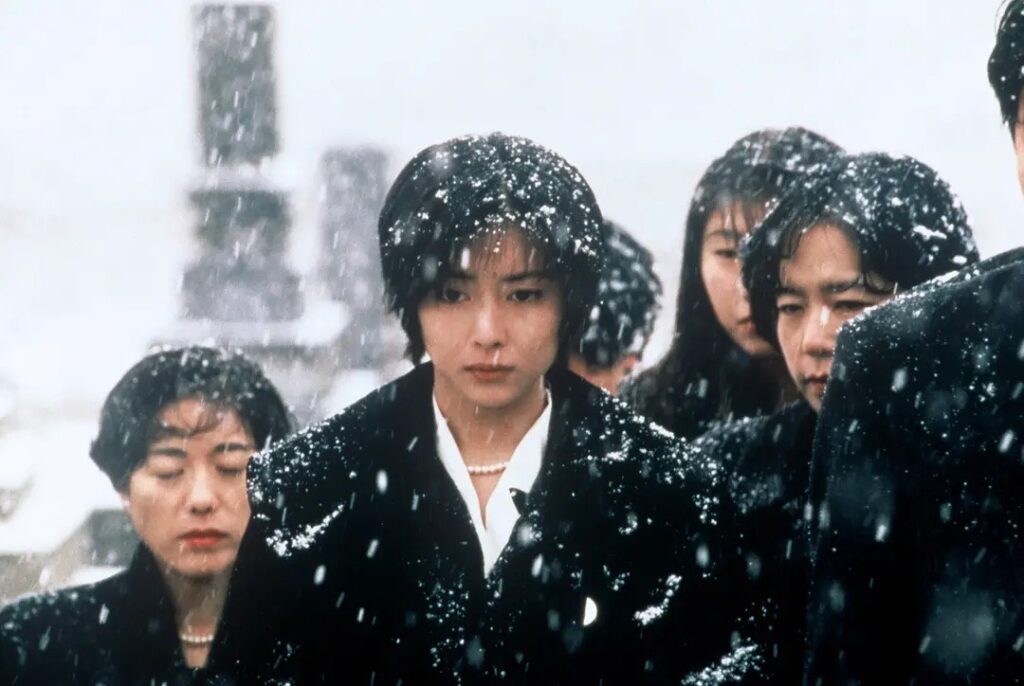
The following is translated from an interview with Shunji Iwai:
In 1987, Murakami-sensei’s Norwegian Wood was published by Kodansha. I was 24 that year, about the same age as the protagonist Watanabe, and I had many of the same confusions in life. Like other young people, I became intensely infatuated with everything in the book, thinking how wonderful it would be to have two girls like Naoko and Midori around me! In 1994, after filming Undo, I began fretfully preparing my next work. What kind of script should I write? I was already entering my thirties and planned to make something like a youth film while I still carried the memories of my twenties. Something that would make young men and women across the country cry until their eyes ran dry, something beautiful that would stay in people’s memories.
At that time, a friend of mine wanted to buy a book as a birthday gift for his girlfriend, and I was dragged along to the bookstore. We were exhausted after looking up and down and didn’t know what to pick, so I asked the clerk: what books are popular with young people now? The clerk smiled and said: if it’s for a girl, Norwegian Wood — it’s selling very well! Heh, you can guess how surprised we were! We didn’t expect our youth’s testament to still be thriving! So each of us bought a copy and happily went home...
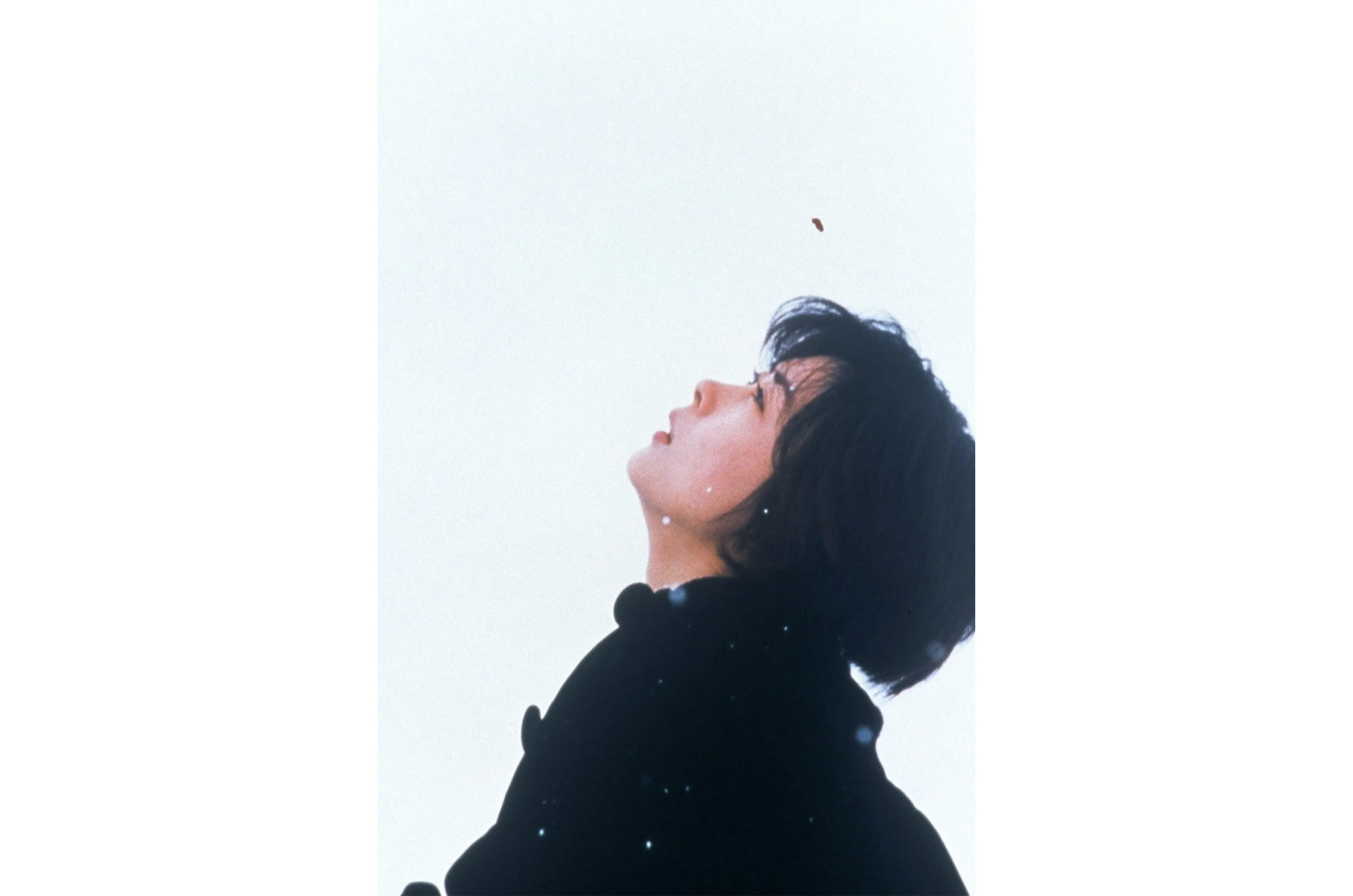
Later I heard Norwegian Wood’s total sales had exceeded five million copies, which meant on average more than one in twenty people owned a copy, and the so-called Haruki Murakami phenomenon rose in society with many academic papers written about it. That made me a bit restless — could it be adapted into a film?
Murakami once said that “modern novelists must somewhat transcend realism,” suggesting the use of prepared keywords like “supernatural” and “fantastical” as catalysts to enter an unreal world. Norwegian Wood’s interweaving of reality and fantasy, the imagined self-movements — fantasies, dreams, daydreams quietly inserted and deliberately manipulated — all create a mysterious atmosphere that fictionalizes reality. For example, Naoko’s secluded mountain sanatorium is a “completely mythical world”; or the first night in the mountain’s underworld, I suddenly wake to find Naoko kneeling beside the pillow staring into my eyes. Her pupils are unusually clear, “almost allowing you to see the world beyond.” After a while, Naoko slips out of her nightgown. Her moonlit nakedness becomes a perfect artwork that makes me “feel no sexual arousal,” and the next day “I” cannot tell if what I witnessed was real or imagined.
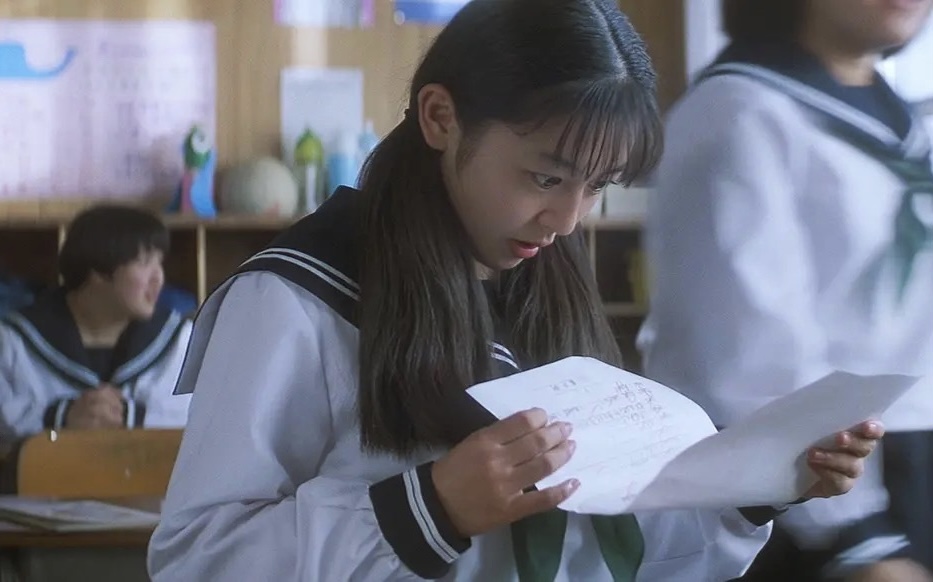
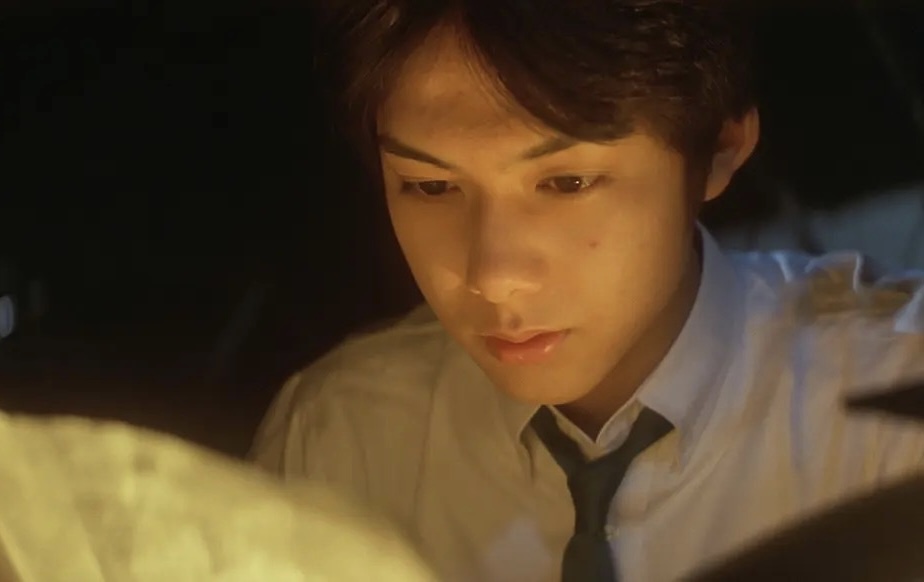
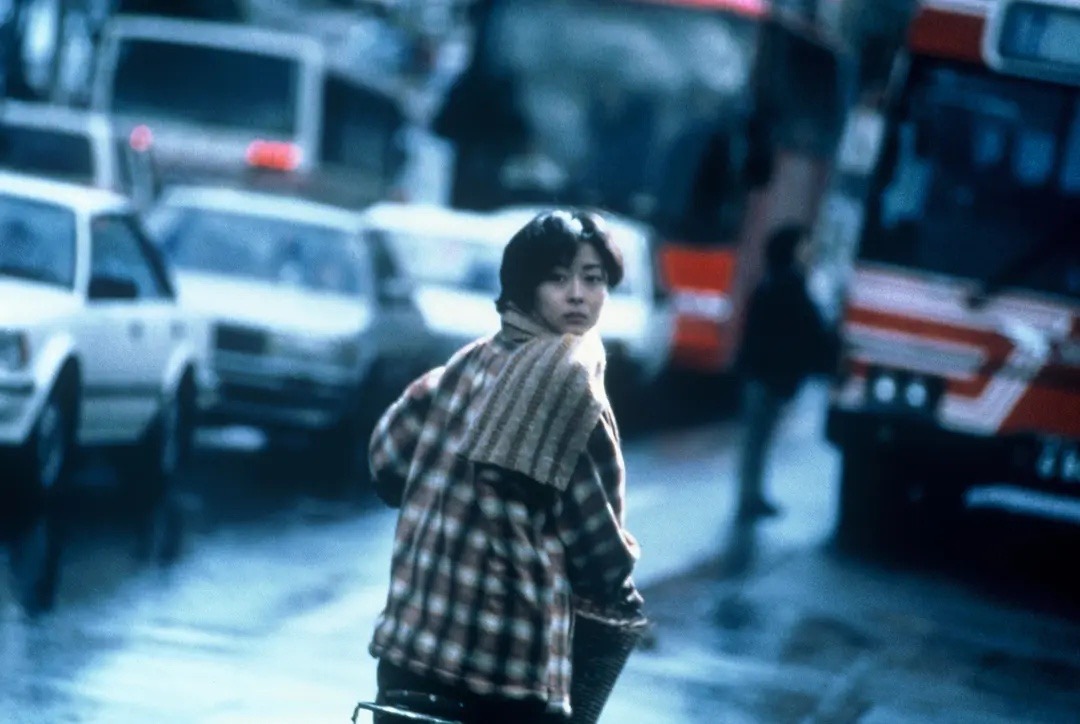
As a director, I also feel that a bit of the unreal can be an artful flourish. In Love Letter, for example, the audience can see a library curtain stirred by the wind and the man Fujiwara suddenly disappear; after the curtain falls, he’s still standing there reading. Or when female Fujiwara rides by, Hiroko standing by the tram quietly calls “Miss Fujiwara,” and Aki brakes and turns; first a shot of Hiroko standing there, then a crowd of strangers spreads and engulfs her from all sides, leaving Aki bewildered, looking around. Many fans heatedly debated whether Aki actually saw Hiroko; in truth, this was my mischievous flourish — did she see her or not? I only wanted to express a missed connection and disorientation so close yet so far.
The above excerpt is taken fromThe Commercial Press Reading WebsiteThe same content appears on other online platforms, and the exact origin is difficult to verify. Many fans have analyzed the commonalities between Love Letter and Norwegian Wood; connections can be found from the main storyline to character structures. Shunji Iwai mentioned he didn’t want to make a film as tragic as Norwegian Wood, but Love Letter’s core is indeed dark, and perhaps because of that the lines resonate so deeply.
“I love you not because you are the only one here to love, but because I only want to love you.”
“The meaning of loving someone is having the courage to let them go when they love someone else — that is love.”
“Love is happiness borrowed with sorrow as collateral.”
“Although time has passed, sincere insights have not been erased. Life is fleeting, but love is eternal. Having someone to miss is happiness.”
“Do you know the difference between liking and loving? For example, with a flower: someone who likes it will pick it, but someone who loves it will water it.”
“Someday, we will become someone else’s memory; try to make it beautiful.”
“If I had been brave back then, would the ending have been different? If you had held on, would the memories be unusual? In the end I still didn’t speak, and you still ignored me.”
“Between coincidence and pursuit, it only seems, to the overly young, as if an ocean separates them. May I ask, are you a wealthy person? I don’t want a shabby love. It’s not being poor that makes a love shabby; it’s lacking romantic memories that makes a love shabby.”
“Sometimes love is crueller than time; some people become blind and recklessly throw themselves in, forgetting that love requires two equally devoted hearts.”
